

IMH spotlight:
junior kelly
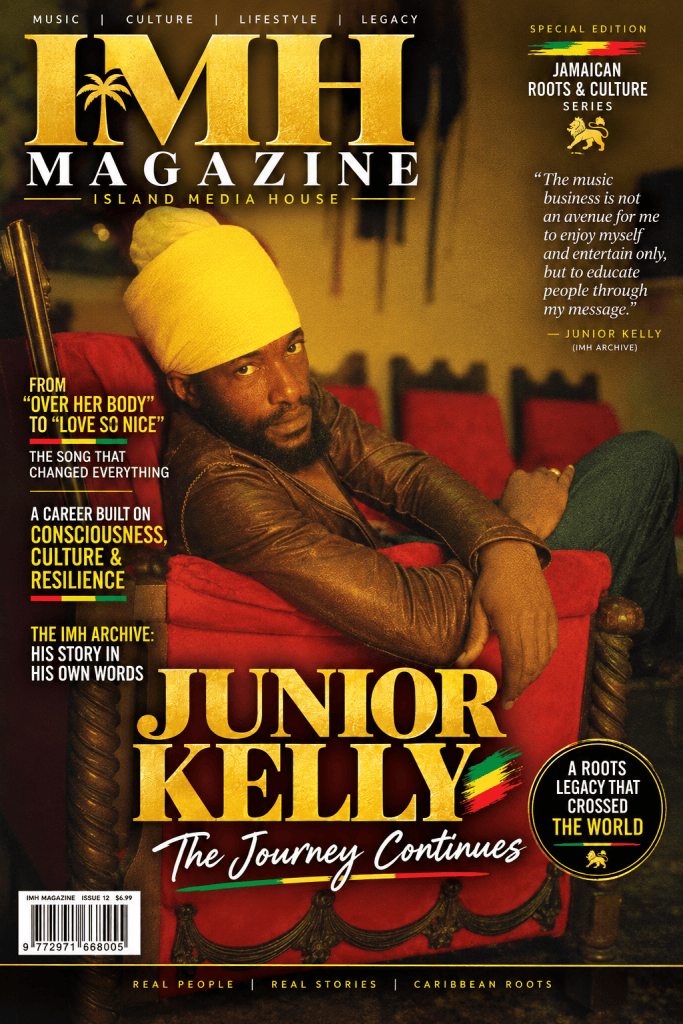
JUNIOR KELLY: THE journey Continues
From “Over Her Body” to “Love So Nice,” a career built on consciousness, resilience and the enduring power of Jamaican roots reggae.
By Island Media House Editorial Desk
There are artists who become famous because of a hit record. Then there are artists whose careers are built on something deeper: message, musicianship, cultural identity and longevity.
Jamaica’s Junior Kelly, born Keith Morgan, belongs to the latter category.
For more than four decades, Kelly has carried a distinctly conscious strain of Jamaican reggae to audiences around the world. His music has addressed love, injustice, identity, spirituality, poverty, resilience, and social responsibility, while his Rastafari faith and roots-reggae foundation have remained central to his artistic identity.
His international breakthrough, “Love So Nice,” transformed his career, but it did not define the entirety of it. Behind that song is a musician who had already spent years developing his craft—and who continued recording and touring long after the song became an international reggae standard.
BEFORE THE BREAKTHROUGH: A MUSICAL FAMILY
In an earlier Island Media House interview, Kelly described music as something that surrounded him from childhood.
His grandfather and father played banjo, his mother sang in church, and his older brother Jim Kelly was a resident deejay associated with the Kilimanjaro sound system.
Jim was more than a family member. He was an early musical influence and mentor.
Kelly told IMH that his brother’s death in 1983, when Jim was killed by gunmen during the sound-system era, profoundly affected him. He recalled that Jim’s lyrical toasting and regular practice in the family living room had influenced him from a young age.
That loss became part of the story behind the artist he would eventually become.
Kelly told IMH that he began recording at a young age and released his first single, “Over Her Body,” in 1985. Yet the major breakthrough would not come immediately.
He spent years developing his voice and pursuing music before international recognition arrived.
As Kelly later explained to the Jamaica Observer, he had been working toward his breakthrough since he was a teenager and did not achieve it until around age 30.
—
THE ROOTS THAT SHAPED JUNIOR KELLY
Kelly’s musical influences reveal much about his artistic philosophy.
In his IMH interview, he named:
- Peter Tosh
- Burning Spear
- Bunny Wailer
- Bob Marley
- Jacob Miller
- Alton Ellis
- Ken Boothe
These were not merely names from a playlist.
They represented a tradition of Jamaican music in which melody and message could coexist.
Kelly told IMH that what attracted him to these artists was the message in their music, not simply the melodies. He explained that their work helped shape his understanding of life and opened his eyes to what was happening beyond Jamaica.
That philosophy would become a defining characteristic of his own catalog.
The music was meant to make people think.
THE LONG ROAD TO “LOVE SO NICE”
The song that changed everything was “Love So Nice.”
Interestingly, the song was written years before it became a hit.
Kelly was living in Boston, Massachusetts, when an incident involving a couple in his apartment building inspired the song’s unforgettable question:
If love is so good, why can it hurt so badly?
According to Kelly’s account to the Jamaica Observer, he was cooking while listening to Bob Marley’s “Stir It Up.” He witnessed a domestic dispute unfolding outside his apartment. During a musical break in “Stir It Up,” the central lyric came to him.
That moment became one of Jamaican reggae’s most recognizable love songs.
Kelly returned to Jamaica determined to have it produced properly. He eventually connected with producer Michael Stanford, and the song was recorded at Anchor Studios, with Nico Wayne providing the musicianship.
The record was first recorded in 1998 and officially released around the turn of the millennium, with the song becoming a major Jamaican and international reggae success.
WHEN THE WORLD FINALLY HEARD JUNIOR KELLY
“Love So Nice” became the record that changed Kelly’s fortunes.
The Jamaica Observer reported in 2025 that the song’s success brought him increased popularity, visibility, financial opportunities and international performances, opening doors to major stages and relationships with established labels and producers including Jet Star and VP Records.
Other accounts document the song’s success across Jamaica and international reggae markets. The Jamaica Gleaner reported that it topped two major Jamaican charts and gained traction in several Caribbean countries, as well as Brazil, Canada and Colombia.
AllMusic records the song’s Jamaican chart run as reaching the top position for 13 weeks in 2000.
THE ALBUM THAT FOLLOWED
The momentum surrounding “Love So Nice” helped establish Kelly’s Rise album internationally.
Released through Jet Star in 2000, Rise presented the roots-oriented sound that would become central to Kelly’s identity.
The album was followed by a prolific run of releases and recordings.
His catalog includes songs such as:
“Black Am I”
“Hungry Days”
“Jah Jah Live On”
“Can’t Get Away”
“Clean Heart”
“God Bless”
“One Day”
“Sunshine”
“Boom Draw”
“Take You There”
“What Will It Take”
“Rasta Should Be Deeper”
The music consistently returned to themes of consciousness, spirituality, relationships, social conditions, and the human experience.
FROM RISE TO A GLOBAL REGGAE CAREER
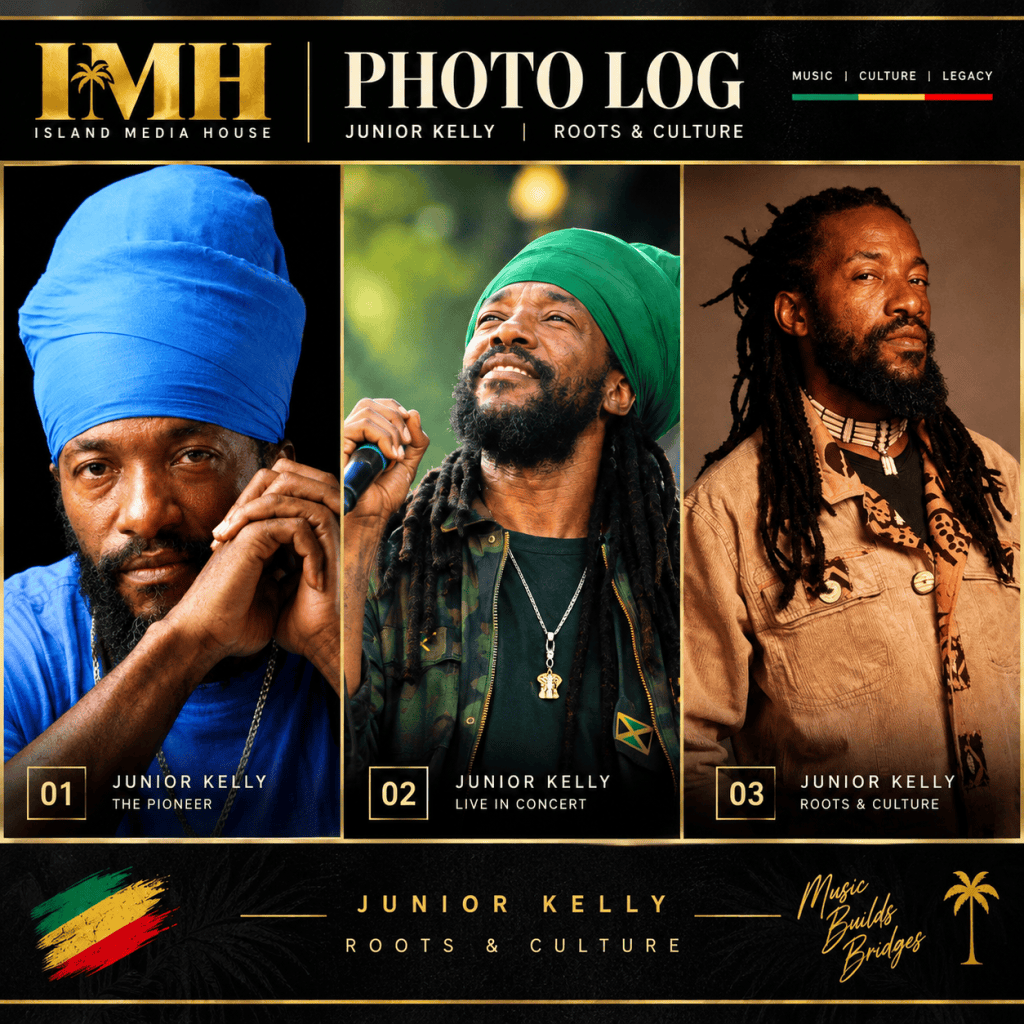
The early 2000s became an especially productive period.
Following Rise, Kelly continued releasing albums and singles, including Juvenile, Tough Life, Love So Nice, Smile, Red Pond, Piece of the Pie, and later projects including Urban Poet.
In 2013, the Jamaica Observer reported that Piece of the Pie was his 10th album, containing 15 tracks and incorporating reggae alongside elements of hip-hop, dancehall and salsa.
That versatility has helped explain his longevity.
Kelly told the Observer in 2021 that he listens to music across genres and deliberately tries not to become comfortable repeating the same sound. His stated approach is to allow the rhythm, environment and emotion surrounding the writing process to influence each song.
One of the most significant parts of Junior Kelly’s career has been his relationship with international reggae audiences.
Europe became particularly important to his career, with Kelly building a strong following there and performing extensively.
He has also toured throughout North America, Europe, the Caribbean and South America.
In 2012, the Jamaica Observer described him as one of contemporary reggae’s better touring acts while reporting on his planned European tour.
His performances at major reggae festivals further reinforced his position within the roots-reggae community. At Rebel Salute, one of Jamaica’s major roots-conscious reggae festivals, Kelly performed alongside established artists including Third World, Etana, Israel Vibration, Capleton and others.
What distinguishes Junior Kelly’s catalog is the consistency of his message.
In his IMH interview, Kelly explained that music was never simply about entertainment for him. He viewed it as a means of educating people and communicating ideas.
That philosophy is also reflected in his public comments over the years.
In 2012, he told the Jamaica Observer:
“The music business is not an avenue for me to enjoy myself and entertain only, but to educate people through my message.”
That approach places Kelly within a long Jamaican tradition of artists using reggae as both entertainment and social commentary.
RASTAFARI AND THE MUSIC
Kelly’s Rastafari faith has also been an important part of his artistic identity.
In the IMH interview, he discussed the influence of Rastafari on his music, explaining that it has affected his work both positively and negatively.
He also spoke about the stereotyping that sometimes accompanies artists associated with reggae and Rastafari, particularly assumptions that every reggae artist represents exactly the same beliefs or musical philosophy.
His response has largely been to allow the music to speak for itself.
That distinction is important.
Kelly’s catalog is rooted in Rastafari consciousness, but it is also deeply personal.
Junior Kelly’s career demonstrates an interesting distinction between commercial recognition, cultural influence, and formal awards.
One documented honor came in 2002, when he was named Best Local Reggae Artist in Best of Jamaica in Boston‘s awards.
His larger recognition, however, has often come through:
- International touring
- Chart success
- Festival appearances
- Album releases
- Critical attention
- Inclusion on major reggae compilations
- A sustained international fan base
His music has also appeared on significant reggae compilations, including VP Records’ Strictly the Best series.
Which makes his story more interesting: his career has been built substantially through longevity, touring, recordings, and audience connection rather than a long list of major mainstream trophies.
THE WORLD TOUR THAT BECAME PART OF THE LEGACY
Kelly’s international career has taken him far beyond Jamaica.
In the IMH interview, he remembered New Zealand particularly fondly, describing the experience of connecting with the Māori community and being welcomed into their culture.
He also recalled performing in The Gambia, where he encountered a crowd so enthusiastic that leaving the venue became difficult because people continued gathering around the hotel.
Those stories reveal something important about reggae’s global reach.
The language may be Jamaican.
The riddim may be Jamaican.
The cultural foundation may be Jamaican.
But the emotional connection can belong to everyone.
Junior Kelly did not disappear after “Love So Nice.”
That is perhaps one of the most important parts of his story.
The song became enormous—but Kelly continued creating.
In 2021, he was still releasing new material and preparing additional projects, while the COVID-19 pandemic had interrupted planned touring across the Caribbean, Europe, the United States, the United Kingdom, and South America.
More recently, his work has continued appearing in international reggae collaborations and releases, including the 2025 single “The Fight” with Italian reggae artist Cienfuego.
And “Love So Nice” remains part of his live identity.
As Kelly himself has acknowledged, audiences continue to expect the song whenever he performs.
THE JUNIOR KELLY LEGACY
Junior Kelly’s contribution to Jamaican music cannot be reduced to one chart position or one song.
His career represents a bridge between generations of roots reggae.
He inherited lessons from artists such as Peter Tosh, Burning Spear, Bunny Wailer, and Bob Marley—and developed those influences into his own voice.
He experienced the difficult years before recognition.
He witnessed the transformation of Jamaican music.
He built an international career.
And he remained committed to music with substance.
“Love So Nice” gave the world a reason to pay attention to Junior Kelly. His body of work gave them a reason to keep listening.
That distinction is the heart of his legacy.
IMH EDITORIAL TRIBUTE
From the sound-system generation to the international festival stage, Junior Kelly has spent decades demonstrating that Jamaican reggae can entertain, educate, challenge, and inspire at the same time.
His story is not simply about a hit.
It is about the journey before the hit, the music after the hit, and the message that remained throughout it all.
And for Island Media House, there is something especially meaningful about revisiting that journey today:
We were there to hear his story years ago.
Now, we are opening the archive again so a new generation can hear it too.
.
“Love So Nice.”- Junior Kelly


Leave a Reply